Foundation repair is priced by method and unit count, not by square footage. Crack injection runs $300 to $800 per crack. Carbon fiber wall strap jobs typically cost $3,000 to $8,000 per wall. Pier underpinning projects range from $8,000 to $25,000 or more depending on how many piers the inspection calls for, which is 6 to 12 for most homes.
The repair method is determined by what is actually happening: crack width and stability, whether walls are bowing and by how much, whether the foundation is settling, and whether water is part of the underlying problem. Getting a quote without measurements of these conditions does not give you a reliable basis for a repair decision.
Foundation repair is worth completing when movement is active, water is entering, a sale or refinance requires a resolved structural issue, or waiting would expand the repair scope. For projects in the five-figure range, getting a second quote and an independent structural engineer review before signing a contract is standard practice.
Ask every contractor for a per-unit price, not just a total. Per-pier pricing on underpinning jobs, per-strap pricing on carbon fiber work, and per-crack pricing on injection repairs let you compare scopes honestly across contractors rather than totals that may reflect different unit counts.
Foundation repair cost by repair method
The method determines the price more than square footage or general severity does. Use these ranges to identify which type of repair your situation likely calls for before comparing quotes.
| Repair method | Typical cost range | When it applies |
|---|---|---|
| Epoxy or polyurethane crack injection | $300 to $800 per crack | Stable, non-structural cracks under 1/4 inch with no active movement or water entry |
| Mudjacking (slab lifting) | $600 to $1,300 | Settled concrete slabs, stoops, porches, or driveway sections that have sunk below grade |
| Polyurethane foam lifting | $800 to $2,500 | Same use as mudjacking but lighter material with faster cure time; preferred when added weight on weak subsoil is a concern |
| Carbon fiber wall straps | $3,000 to $8,000 per wall | Bowing basement or crawlspace walls that have moved less than 2 inches; no exterior excavation needed |
| Wall anchors or helical tiebacks | $3,500 to $9,000 per wall | Bowing walls past 2 inches or when carbon fiber alone cannot stop continued movement |
| Push pier or helical pier underpinning | $8,000 to $25,000+ | Settling foundations; typically 6 to 12 piers at $1,000 to $3,500 per pier depending on type and depth to bearing soil |
| Interior drainage or waterproofing system | $3,000 to $12,000 | Chronic water intrusion through the foundation; often paired with structural repair, not a standalone structural fix |
| Full foundation replacement | $20,000 to $100,000+ | Foundations beyond stabilization; reserved for severely damaged or deteriorated structures |
For pier projects, ask the contractor to quote by pier count and per-pier price. Most residential underpinning jobs need 6 to 12 piers, so the per-pier price is the most useful number when comparing contractors.
Signs you may need foundation repair
Visible symptoms help identify when an inspection is worth scheduling. Severity, speed of change, and whether symptoms appear in multiple locations matter more than any single symptom alone.
Hairline cracks smaller than 1/16 inch in relatively new concrete are often normal shrinkage and typically do not require structural repair. A foundation repair contractor can inspect at no charge, but an independent structural engineer provides a more objective assessment without a financial interest in recommending repair.
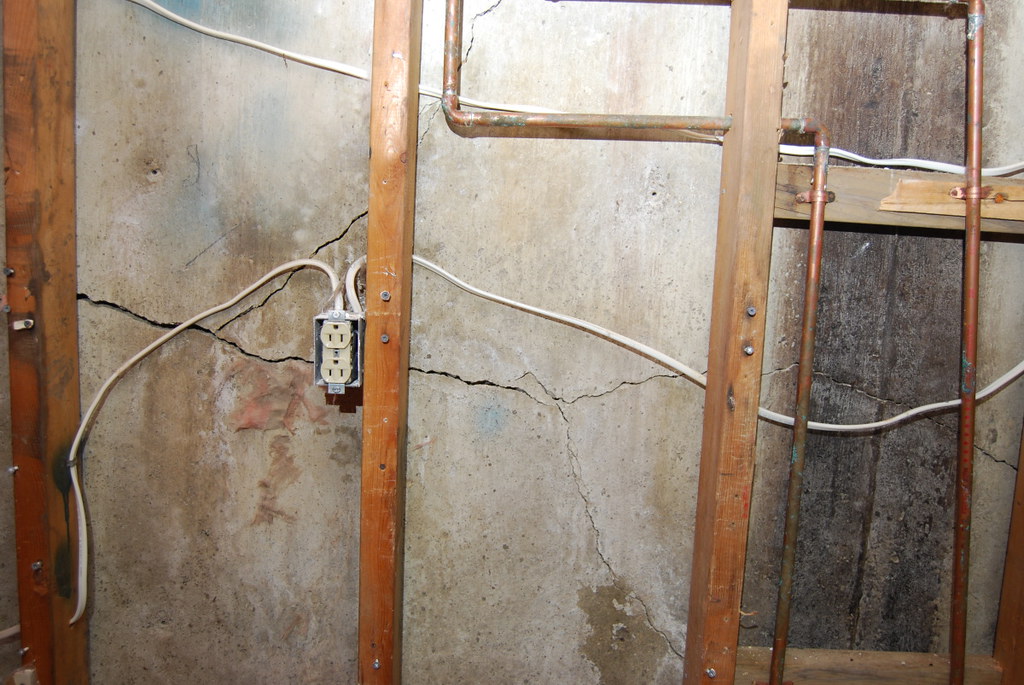
What foundation warning signs can look like
Photos are useful when they show context: crack direction, water entry, nearby openings, patched areas, and whether the same symptom appears in more than one place. These examples are not a diagnosis, but they show the kinds of details that make an estimate more specific.
What drives foundation repair cost
Pier count, repair method, access difficulty, and whether water is involved affect the final cost more than house size does.
Repair method and unit count
Crack injection is priced per crack, carbon fiber straps per strap or per wall, and piers per unit. A project requiring 8 push piers at $1,800 each costs $14,400 before excavation or engineering fees. The same home needing only 6 piers at $1,400 each costs $8,400. The inspection determines pier count, which is why a quote without floor elevation measurements cannot be reliable.
Push piers versus helical piers
Push piers are hydraulically driven straight down using the weight of the home as resistance. They cost $1,000 to $2,500 each and are faster to install. Helical piers are screwed into the ground and do not rely on the home's weight, making them better for lighter structures, new construction, or soft soil conditions. Helical piers cost $1,500 to $3,500 each. Both are measured by depth to bearing soil, and price rises when that depth is greater.
Wall bowing and method threshold
Carbon fiber straps are effective when walls have bowed less than 2 inches and movement is not active. Once bowing passes that threshold, wall anchors or helical tiebacks are typically required. Wall anchor installation involves drilling through the foundation wall and setting a plate in the yard, which adds excavation labor and yard restoration costs to the project.
Soil type and moisture
Expansive clay soil, common in Texas, Oklahoma, the Midwest, and parts of the Southeast, shrinks during drought and swells during wet periods. This movement is one of the most common drivers of pier projects and repeat drainage corrections. Hydrostatic pressure from poorly graded soil or clogged drainage increases lateral force on basement walls and accelerates bowing.
Drainage correction scope
A structural repair that leaves the water source unaddressed often fails or returns. Interior drainage systems, sump pumps, exterior waterproofing, downspout extensions, and grading correction are separate line items from structural work and can add $3,000 to $12,000 or more to a project. Ask contractors to separate these in the written scope so you can evaluate each component.
When foundation repair is usually worth completing
Foundation repair is often worth the cost when it protects safety, stops active damage, or is required for a sale or financial transaction.
- Movement is active, meaning cracks, bowing, or floor slope are measurably getting worse over time.
- Water is entering through the foundation and causing mold, rot, or ongoing damage to interior materials.
- A pending sale, refinance, or insurance review requires documented structural repair.
- The home is unsafe to occupy without repair and relocation is not a practical alternative.
- Addressing the issue now is cheaper than the expanded scope likely required if left another season.
When to pause before signing a repair contract
Some situations call for a second opinion or more diagnosis before committing to a large project.
- The damage appears cosmetic, has not changed in several years, and there is no water intrusion.
- The repair cost approaches the financial threshold where selling or moving becomes more practical.
- Two quotes disagree sharply on method or pier count and no structural engineer has reviewed the situation.
- The contractor cannot show floor elevation measurements, pier count rationale, or written exclusions.
- The proposed scope ignores visible water, grading, or drainage problems that contributed to the damage.
Estimate your foundation repair cost
Use the calculator as a planning range before requesting quotes. For pier projects, the estimate scales with pier count confirmed at inspection. For crack or strap work, it scales with the number of units treated.